Land Clearing Guide for New Construction in Maine
Land Clearing, Residential Site Work Maine, Lot Preparation
Land Clearing for New Construction in Maine: Your Complete Guide
Turning a wooded Downeast Maine lot into a buildable homesite takes more than knocking down a few trees. Here’s how proper land clearing, stumping and grubbing, and rough grading set the stage for a strong, dry, trouble‑free home for decades to come.
The Dream of a Wooded Lot in Downeast Maine
Buying a wooded lot in Downeast Maine is exciting. You walk the property in Hancock County or near Ellsworth, listening to the wind in the pines and picturing morning coffee on the porch, kids exploring the woods, and a quiet driveway winding in from the road. For many families building a new home in Maine is a once‑in‑a‑lifetime project, and the land is where that dream starts.
Then reality sets in. That beautiful forest is also dense underbrush, tangled roots, granite boulders, and hidden ledge. You quickly realize there’s a big difference between a pretty piece of land and a buildable dirt lot that’s ready for foundation work, utilities, and a septic system. Turning raw land into a solid homesite is where professional residential site work Maine specialists come in.
From Trees and Ledge to a Buildable Lot: The Real Challenge
Maine’s terrain is unforgiving. In Hancock County and the Ellsworth area, it’s common to find a mix of soft topsoil, clay pockets, large glacial rocks, and shallow ledge all in the same small area. The surface may look fairly smooth, but just below are roots, stumps, and buried organics waiting to cause trouble for your future foundation and driveway.
Proper land clearing Hancock County isn’t just about knocking down trees. It’s about:
Removing trees, stumps, and roots from the building footprint, driveway, and yard areas
Dealing with rocks, ledge, and unstable soils so your home sits on firm ground
Creating a clean, workable surface for your foundation contractor, septic installer, and utility crews
Done right, lot preparation Ellsworth ME saves you time, money, and headaches later. Done halfway, it can lead to settling foundations, soft driveways, drainage issues, and expensive rework after the house is already framed.
The Big Mistake: Forestry Mulching vs. True Land Clearing
One of the most common—and costly—missteps we see is confusing forestry mulching vs land clearing. On the surface, they can look similar: a machine moves through the woods, and suddenly you can walk around more easily. But what’s happening below the surface is what really matters for new construction.
What Forestry Mulching Actually Does
Forestry mulching uses a specialized head to grind brush, saplings, and small trees into a layer of wood chips right on the forest floor. It’s fast, it looks neat, and it’s perfect for:
Creating or widening walking and ATV trails
Knocking down thick brush and undergrowth for better access and visibility
Managing overgrown areas where you don’t plan to build
What forestry mulching does not do is remove stumps, roots, or buried organics. The trees are ground off at or near ground level, but the entire root system is still in place. For a future home site, that’s a serious problem.
Why Forestry Mulching Alone Is a Problem for New Construction
If you try to build a house or driveway on mulched ground, you’re essentially building on a sponge of decaying wood and roots. Over the next few years those roots rot out, voids form, and the ground settles unevenly. That’s when you see:
Cracked slabs and foundation walls from differential settling
Soft, rutted driveways that never seem to stay smooth or dry
Water pooling near the foundation because the grade has shifted
📌 Key Takeaway: Forestry mulching is excellent for access trails and brush control, but it is not a substitute for true land clearing when you’re preparing a building site.
Stumping and Grubbing: The Foundation of a Solid Homesite
For building a new home in Maine, the gold standard is stumping and grubbing. This process removes not just the visible trees, but the entire root system and organic layer in the areas where you’ll build and drive.
Stumping and grubbing typically includes:
Uprooting and removing stumps, major roots, and buried wood from the house footprint, driveway, and septic area
Stripping off soft, organic topsoil where necessary to reach firm subgrade
Stockpiling usable topsoil for future lawn and landscaping
Once the organics are removed, your builder can bring in structural gravel and compacted fill knowing it’s sitting on stable, clean ground. This is the difference between a house that moves and a house that stays put.
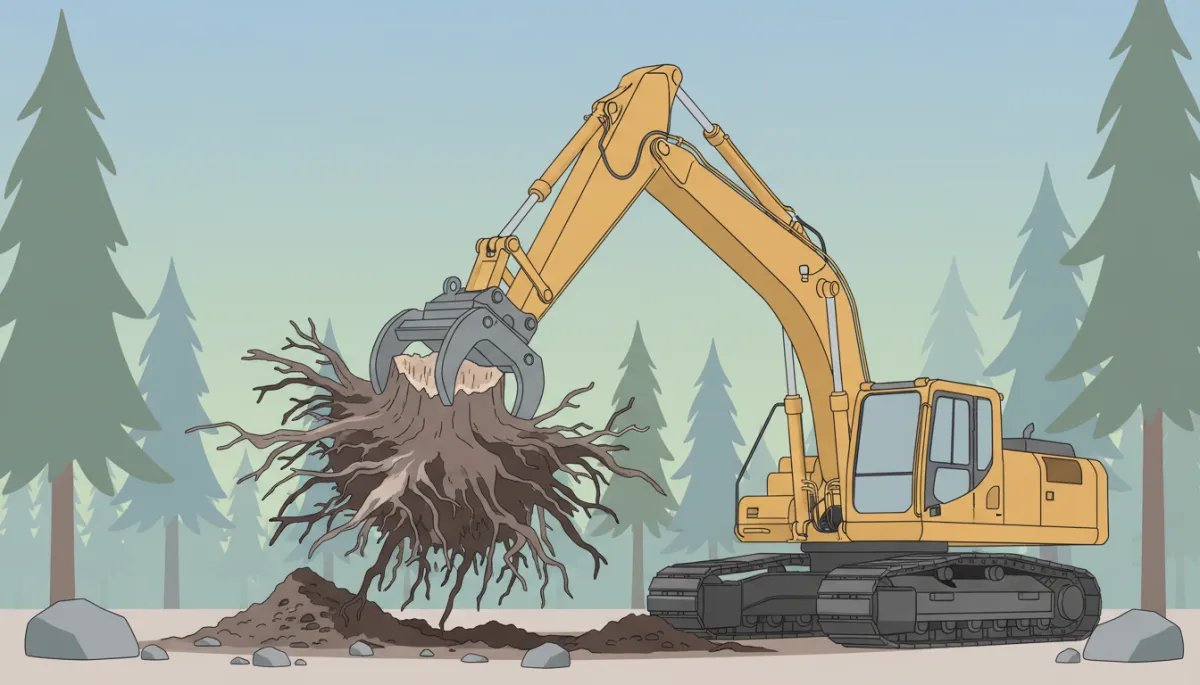
Complete stump removal prevents future settling and soft spots under your new home.
The H&S Equipment Advantage: Built for Maine’s Tough Terrain
Not all land‑clearing equipment is created equal—especially in Maine. Light skid steers and compact tractors struggle when they meet ledge, granite, and heavy clay. That’s why H&S Sitework Construction invests in full‑sized tracked excavators with hydraulic thumbs and dozers specifically suited for Downeast conditions.
Full‑Sized Tracked Excavators with Hydraulic Thumbs
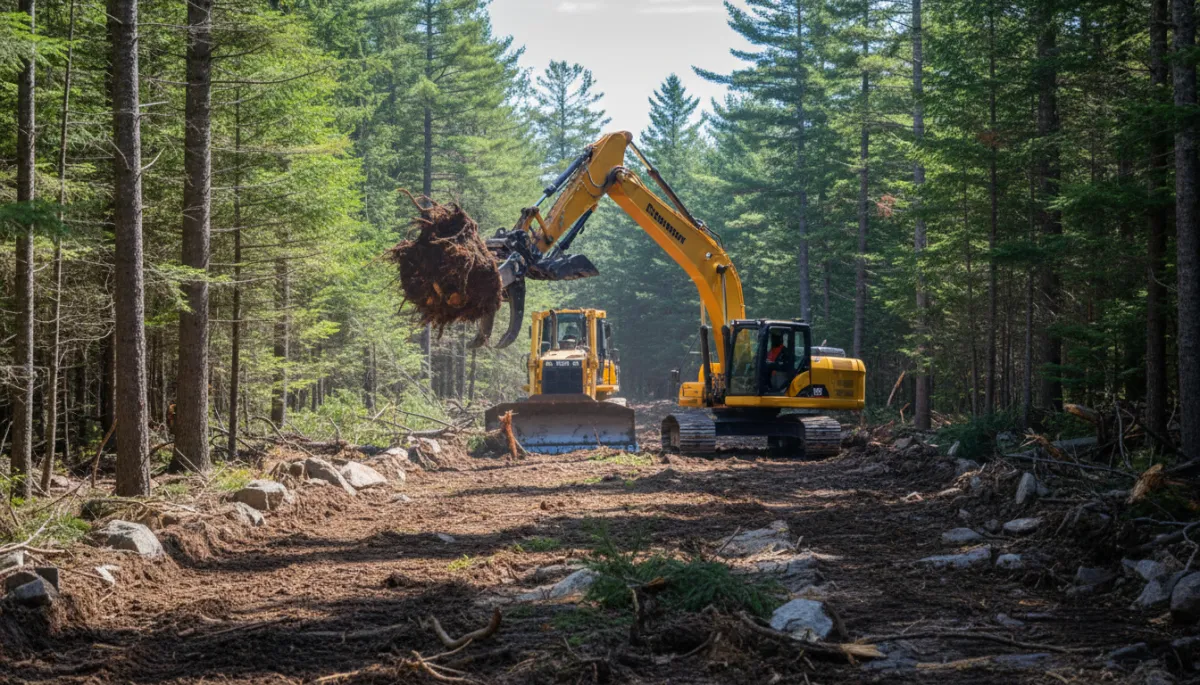
Our excavators have the reach, power, and stability to handle large trees, deep stumps, and buried rocks safely and efficiently. The hydraulic thumb attachment acts like a strong hand, allowing the operator to grab, twist, and pull stumps and boulders out of the ground instead of just pushing them around.
Safely remove tall pines and hardwoods near your future house site or road frontage
Extract stubborn stumps and root balls without leaving hidden chunks behind
Sort logs, brush, and stumps into neat piles for hauling, burning, or burial
Dozers for Shaping and Rough Grading
Once the heavy clearing is done, dozers come in to push, level, and shape the land. On a typical lot preparation Ellsworth ME project, our dozers:
Cut in the driveway path and building pad to the elevations your builder needs
Feather slopes into the surrounding grade for smooth transitions and good drainage
Spread and smooth fill material so your site is ready for fine grading later
With the right combination of excavators and dozers, H&S can tackle Maine’s ledge, granite outcrops, and clay pockets efficiently, keeping your project on schedule and within budget.
Debris Management: Keeping Your Lot Clean and Build‑Ready
Proper land clearing produces a lot of material: logs, brush, stumps, and root balls. How that debris is handled can make the difference between a tidy, professional jobsite and a messy, frustrating one. At H&S, we walk you through debris options that fit your goals, budget, and local regulations.
Hauling Stumps and Brush Offsite
The cleanest option is to load stumps and brush into trucks and haul them to an approved disposal or processing site. This leaves your lot open and uncluttered, which many homeowners prefer—especially on smaller parcels where space is limited.
Onsite Burial (When Conditions Allow)
On larger rural properties, it may be possible to create a designated stump burial pit outside of any building, driveway, or septic areas. Our excavators dig a suitable pit, place stumps and large root masses inside, and backfill with clean material. When done correctly and in the right location, this keeps disposal costs down while protecting the integrity of your build area.
Controlled Burning of Brush Piles
In some Maine towns, controlled burning of brush is allowed with proper permits and weather conditions. H&S can pile brush in designated areas suitable for burning and coordinate with you on timing and safety requirements. Burning can be an economical way to reduce volume, though it does require planning around burn permits and fire danger ratings.
💡 Pro Tip: Ask early about your debris options. Combining hauling, burial, and brush burning often gives the best balance of cost savings and a clean, build‑ready site.
Rough Grade Finish: Preparing for Foundation, Utilities, and Septic
Once the trees, stumps, and debris are out of the way, the next step is a professional rough grade finish. This is where your property starts to look less like a logging job and more like a future homesite. For residential site work Maine projects, H&S focuses on three key goals: stability, drainage, and accessibility.
Stripping Topsoil in the Building and Drive Areas
Topsoil is great for growing grass and gardens, but it’s not what you want under a foundation or driveway. It holds water and is full of organic material that breaks down over time. During rough grading, we strip off this soft layer in the building footprint, driveway path, and septic area, stockpiling it for future landscaping.
Creating a Level, Clean Building Pad
Using excavators and dozers, we cut and fill to create a level or properly sloped pad where your foundation will sit. This may involve:
Cutting down high spots and using that material to build up low areas
Compacting fill in lifts to create a dense, stable base for future gravel and concrete work
Ensuring the pad slopes gently away from the house location to shed water
Planning for Utilities and Septic from Day One
A smart rough grade also makes life easier for your foundation, plumbing, and electrical crews. During land clearing Hancock County projects, H&S coordinates with your builder or designer to allow for:
Clear access for utility trenching from the road to the house (power, water, communications)
Proper elevations and space for septic tanks and leach fields, per your design and soil tests
Safe, stable access for concrete trucks and material deliveries

A clean, level rough grade sets your new home up for smooth construction.
Why Choose H&S for Residential Site Work in Maine?
When you’re investing in building a new home in Maine, you want partners who understand both the land and the construction process. H&S Sitework Construction brings:
Experience with local soils, ledge, and drainage patterns in Hancock County and the Ellsworth region
The right heavy equipment—full‑sized tracked excavators, hydraulic thumbs, and dozers—to handle tough Maine terrain efficiently
A focus on doing the job right the first time, so your builder isn’t fighting soft spots, buried stumps, or poor drainage later
“Good site work is like a good foundation—you don’t think about it when it’s done right, but you’ll never stop noticing it if it’s done wrong.”
Ready to Walk Your Lot? Call H&S Sitework Construction
If you’ve recently purchased a wooded parcel or are considering lot preparation Ellsworth ME or anywhere in Hancock County, the best next step is a walk‑through with an experienced site contractor. We’ll look at your trees, slopes, ledge, and access, then talk through:
The best location and orientation for your home and driveway
How much clearing and stumping and grubbing you’ll need for a safe, stable build
Debris management options and a realistic project timeline
Don’t risk your dream home on partial clearing or shortcut site work. Start with a solid plan and a crew that understands Maine land from the bedrock up.
Call H&S Sitework Construction today at 207‑631‑0139 to schedule a walk of your lot, discuss your vision, and get started on transforming your wooded property into a clean, build‑ready site. The sooner we’re involved, the smoother your entire building process will be—from the first tree down to the final foundation pour.
