The Ultimate Guide to Septic Installation in Maine: Everything You Need to Succeed
Installing a septic system in Maine involves more than just digging a hole and dropping in a tank. With Maine's rocky terrain, seasonal frost, and strict environmental regulations, success depends on understanding the process, requirements, and potential challenges before you break ground.
Whether you're building new construction, replacing a failed system, or upgrading to meet current codes, this guide walks you through everything you need to know about septic installation in Maine.
Understanding Maine's Septic Installation Requirements
Maine operates under the Subsurface Wastewater Disposal Rules (144A CMR 241), which govern every aspect of septic system installation. These rules protect both groundwater quality and public health, but they also create specific requirements you must follow.
Professional Licensing Requirements
Here's something that surprises many property owners: while site evaluators must be licensed in Maine, septic installers and inspectors are not legally required to hold licenses. However, Maine offers a voluntary certification program for contractors that demonstrates they've received proper training in septic installation and erosion control techniques.
The one critical exception involves work in shoreland zones. All earthwork performed within shoreland zoning must be completed by a contractor certified in erosion control. Given Maine's extensive coastline and numerous lakes, this requirement affects many properties.
Step 1: Site Evaluation and System Design
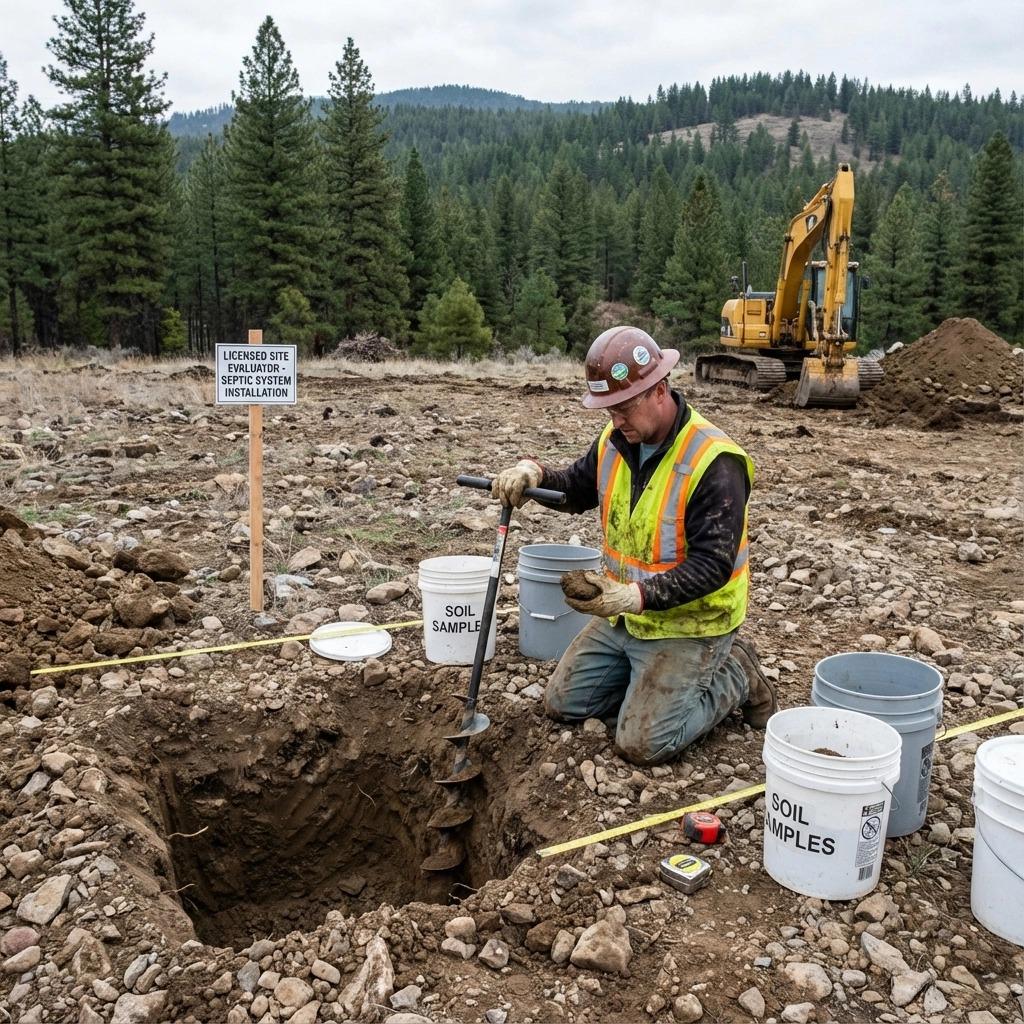
Your septic installation journey begins with a licensed site evaluator who assesses your property's soil composition, drainage characteristics, and limiting factors. In Maine, limiting factors include seasonally high groundwater, bedrock, and impermeable soil layers.
Maine allows septic systems on soil with depth to limiting factors as shallow as twelve inches, though this often requires raised bed systems to ensure proper wastewater treatment. Your site evaluator determines the specific system type and size based on your property's unique conditions.
Recent Design Updates
Maine recently strengthened requirements for Enviro-Fin treatment systems.
Residential systems now require a minimum of 2 units per bedroom (increased from 1 unit per 1.5 bedrooms).
Commercial systems need 1 unit per 75 gallons per day.
These changes improve system performance and environmental protection.
Step 2: Permits and Official Approvals
Once you have your system design, you'll need a permit from your Local Plumbing Inspector (LPI). The permit process involves:
Submitting three copies of your system design on an HHE-200 form
Paying the required permit fee
Receiving a permit sticker for your design documents
Scheduling inspections with your LPI
Your LPI keeps two copies for local and state records and returns one copy to you. Good news: first-time systems meeting minimum setback requirements typically don't need additional permits from the Department of Environmental Protection or other state agencies.

Critical Setback Requirements
Maine's setback requirements protect water sources and sensitive environmental areas. Your septic system must maintain specific distances:
Water bodies or courses: 50–150 feet (depending on system type)
Drainage ditches: 25–75 feet
Slopes greater than 3:1: 10–25 feet
Wells: 100 feet minimum
Property boundaries: Varies by municipality
These setbacks often determine your system's location and design. Working with experienced professionals helps ensure compliance while maximizing your property's usable space.
Installation Process and Best Practices
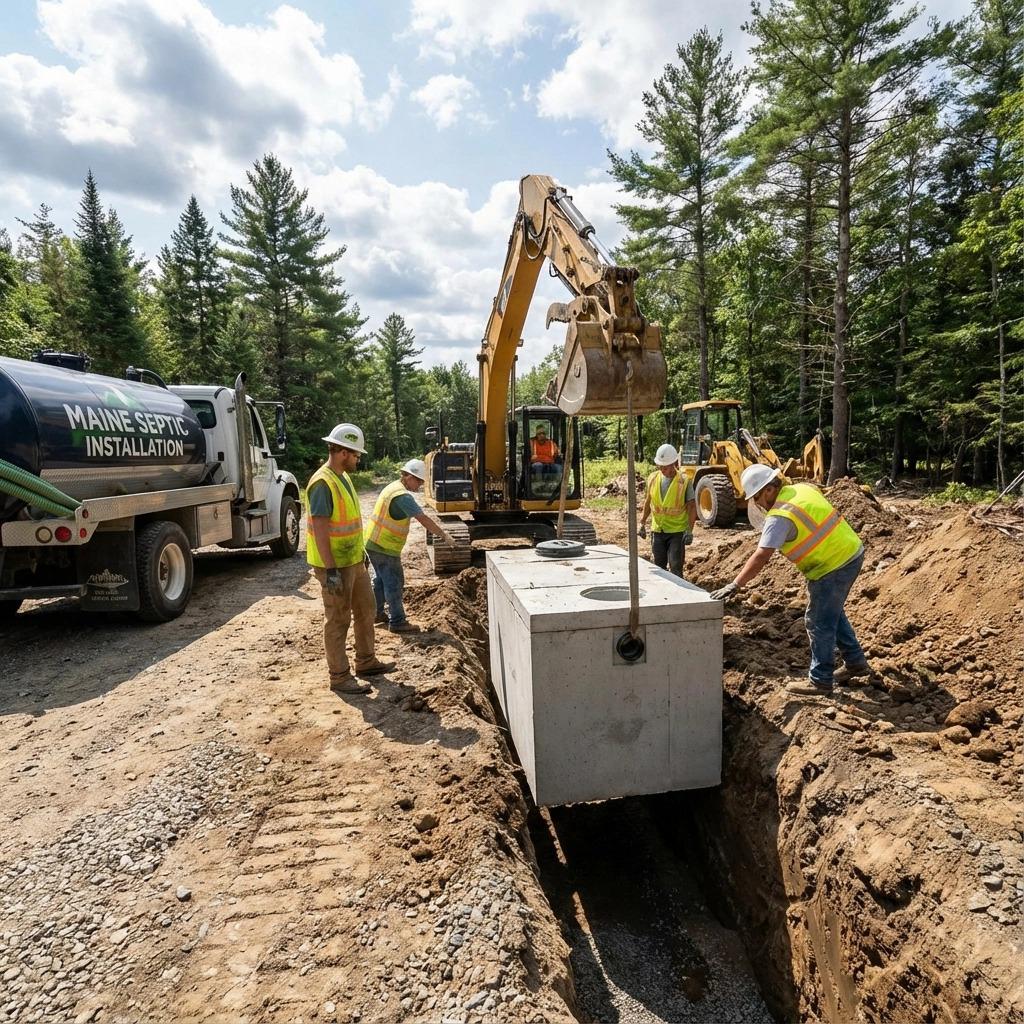
Proper installation requires coordinating multiple phases: excavation, system placement, backfilling, and final grading. Maine's challenging conditions demand specific techniques and equipment.
Dealing with Rocky Terrain
Maine's glacial history left behind rocky soils that challenge even experienced contractors. Professional excavation often involves:
Specialized equipment for rock removal
Careful soil preservation for backfill
Proper bedding material selection
Strategic system placement to minimize rock excavation
Cold Weather Considerations
Maine's freezing temperatures affect installation timing and system performance. Professional installers understand frost depth requirements, proper insulation techniques, and seasonal installation limitations.

Tank Specifications and System Components
Maine requires holding tanks with a minimum capacity of 7 times daily flow, but not less than 1,000 gallons.
Septic tank effluent filters are mandatory with certain advanced treatment systems.
Your system design specifies exact tank sizes, distribution box requirements, and leach field dimensions based on your property's soil conditions and household size. Professional installation ensures all components meet code requirements and function properly together.
Inspection Requirements
Beginning January 1, 2020, all septic systems in Maine's Shoreland Zone must be inspected during property transfers. This requirement applies to all Shoreland Zones, not just coastal areas.
During installation, your LPI conducts inspections at critical phases:
Pre-installation: Verifying excavation depth and soil conditions
Mid-installation: Checking system placement and connections
Final inspection: Confirming proper backfill, grading, and surface restoration
Scheduling these inspections properly prevents delays and ensures code compliance.

Common Installation Challenges in Maine
Seasonal High Groundwater
Spring snowmelt and heavy rains create seasonal high groundwater that affects system design and installation timing. Professional installers know when conditions allow safe excavation and how to design systems that function properly despite variable groundwater levels.
Ledge and Bedrock
Shallow bedrock requires careful system placement and sometimes alternative designs like raised beds or mound systems. Experienced contractors have the equipment and expertise to work around these geological challenges.
Environmental Protection
Maine's focus on water quality protection means strict adherence to setbacks, erosion control, and construction methods that minimize environmental impact. Professional installation ensures compliance while protecting your investment.
Why Professional Installation Matters
While Maine doesn't require licensed installers, the complexity of proper septic installation makes professional expertise essential. Experienced contractors understand local soil conditions, regulatory requirements, and proven installation techniques that ensure long-term system performance.
At H&S Sitework Construction, we've helped countless Maine property owners navigate the septic installation process successfully. Our team combines local knowledge, proper equipment, and attention to detail that protects your investment and ensures code compliance.

Planning Your Septic Installation Project
Successful septic installation requires careful planning and coordination.
Start by contacting a licensed site evaluator to assess your property and develop appropriate system designs.
Once you have your design, secure permits and schedule installation during favorable weather conditions.
Professional excavation and sitework contractors handle the complex coordination required for successful installation. From initial excavation through final restoration, experienced teams ensure your project meets all requirements while staying on schedule and budget.
Ready to Move Forward?
Septic installation represents a significant investment in your property's functionality and value. Success depends on understanding Maine's requirements, working with qualified professionals, and following proper procedures from start to finish.
Whether you're planning new construction or replacing an existing system, contact H&S Sitework Construction today. Our experienced team helps Maine property owners navigate the septic installation process with confidence, ensuring reliable results that protect both your investment and the environment.
Your septic system installation success starts with the right team. Let's discuss your project and develop a plan that meets your needs, timeline, and budget.
