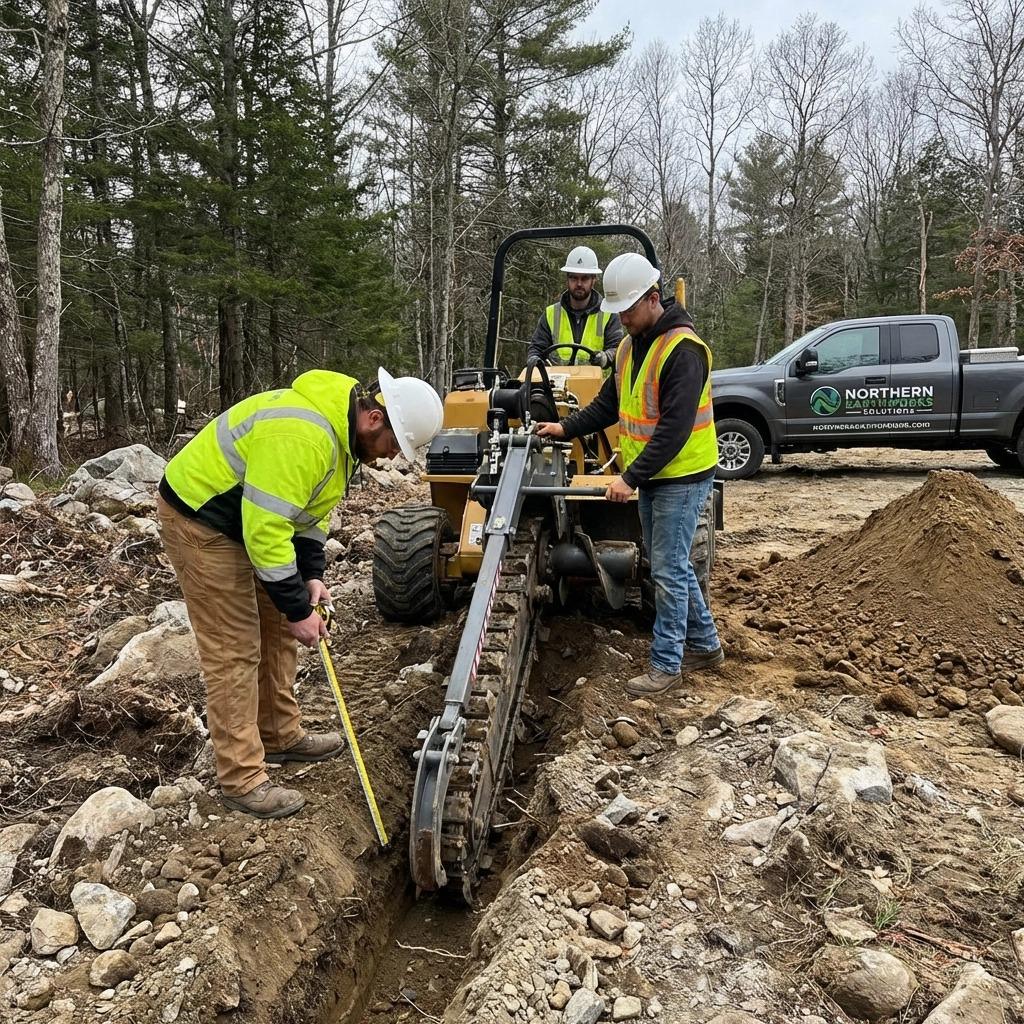
7 Trenching Mistakes Maine Property Owners Make (And How Professional Companies Prevent Them)
Whether you're installing a new septic system, running utility lines to an outbuilding, or tackling drainage issues on your Maine property, trenching is likely part of the equation. It seems straightforward enough: dig a ditch, lay some pipe, fill it back in. Right?
Not quite.
Trenching mistakes can lead to costly repairs, safety hazards, and projects that fail within a few years. The good news? Most of these problems are completely preventable when you know what to watch for—or when you work with professionals who do this every day.
Here are seven trenching mistakes we see Maine property owners make, and how professional companies prevent them from happening in the first place.
Mistake #1: Skipping a Proper Site Assessment
This is the foundation of every successful trenching project, and it's the step most often rushed or skipped entirely. A thorough site assessment means understanding your soil type, identifying where water naturally collects and flows, locating underground obstacles, and evaluating how your property's unique characteristics will affect the project. Maine's diverse terrain—from coastal clay to inland ledge—means no two properties are the same.
How professionals prevent it: Before any equipment touches the ground, experienced contractors walk your property, evaluate drainage patterns, and identify potential challenges. They consider factors like frost depth (critical in Maine), soil composition, and how seasonal changes might impact the trench over time. This upfront work saves you from expensive surprises down the road.

Mistake #2: Failing to Locate and Mark Utilities
This one isn't just a mistake—it's dangerous. Hitting a buried gas line, electrical cable, or water main during trenching can cause serious injuries, service outages for your neighbors, and massive repair bills. Maine properties often have utility lines that were installed decades ago, and records aren't always accurate or complete.
How professionals prevent it: Before breaking ground, professional trenching companies contact Dig Safe (Maine's utility notification system) to have all underground utilities marked. But they don't stop there. Experienced operators know that Dig Safe doesn't cover private utilities like lines running to outbuildings, old septic systems, or irrigation. A thorough site assessment combined with proper utility location protocols keeps everyone safe and your project on track.
Mistake #3: Getting the Slope and Grade Wrong
Here's where physics meets dirt work. For drainage trenches, even small miscalculations in slope can render your entire project useless. The standard recommendation is a 1% slope—that's one foot of drop over 100 feet of distance. Too little slope and water pools in the pipe. Too much slope and water rushes through so fast it leaves sediment behind, eventually clogging the system.
For utility trenches, improper grading can put stress on pipes, cause settling issues, and create problems that don't show up until months or years later.
How professionals prevent it: Professional excavation crews use laser levels, transit equipment, and years of experience to get the grade exactly right. They understand how Maine's freeze-thaw cycles affect soil movement and build in appropriate allowances. It's precision work that makes the difference between a trench that functions for decades and one that fails in a few seasons.

Mistake #4: Ignoring Proper Shoring and Trench Safety
Trenches can be deceptively dangerous. Soil that looks stable can collapse without warning, and even shallow trenches pose serious risks. OSHA has strict regulations about trench safety for good reason: cave-ins are one of the leading causes of construction-related fatalities. Many DIY trenching projects skip shoring entirely, and some contractors cut corners to save time. This puts workers and property owners at serious risk.
How professionals prevent it: Reputable trenching and ditching companies follow OSHA guidelines and use appropriate protective systems based on trench depth, soil conditions, and project requirements. They know when sloping, shoring, or trench boxes are required—and they don't take shortcuts. Your safety and theirs is non-negotiable.
Mistake #5: Using the Wrong Backfill Materials
What goes back into the trench matters just as much as how you dig it. One of the most common mistakes we see? Using the excavated soil as backfill around pipes. Native soil—especially Maine's clay-heavy varieties—can compact unevenly, retain moisture, and put pressure on pipes that leads to cracks and failures over time.
How professionals prevent it: Depending on the application, professional contractors use appropriate backfill materials like clean gravel, crushed stone, or specialized fill. For drainage applications, the right aggregate allows water to flow freely to the pipe. For utility trenches, proper bedding and backfill protect pipes from damage and settling. It costs a bit more upfront, but it's the difference between a trench that lasts and one that becomes a recurring problem.

Mistake #6: Attempting Complex Trenching as a DIY Project
We get it. There's satisfaction in doing things yourself, and renting a trencher from the local equipment dealer seems like a cost-effective solution. But trenching involves more than just operating machinery. It requires understanding soil mechanics, calculating proper depths for frost protection, ensuring code compliance, coordinating utility locates, managing water infiltration, and dozens of other factors that come with experience.
How professionals prevent it: Professional excavation services bring specialized equipment sized appropriately for your project—not a one-size-fits-all rental machine. More importantly, they bring trained operators who've handled hundreds of similar projects. They know how to adapt when they hit unexpected ledge, how to manage groundwater, and how to keep your project on schedule despite Maine's unpredictable weather. The math often works out in your favor too. When you factor in equipment rental, material delivery, permits, your time, and the risk of costly mistakes, professional trenching frequently costs less than DIY—with far better results.
Mistake #7: Neglecting Long-Term Maintenance Planning
Your trenching project doesn't end when the last shovel of dirt goes back in place. Drainage systems can clog with silt, roots, and debris over time. Utility trenches can settle, especially during the first few freeze-thaw cycles. Cleanout access points get buried or forgotten. Without a maintenance plan, even perfectly installed systems eventually fail.
How professionals prevent it: Experienced contractors think beyond the immediate project. They install appropriate cleanout access points and document their locations. They explain what maintenance your system will need and when. They build relationships with property owners because they know you'll need them again—and they want to be your first call.

The Bottom Line: Expertise Matters
Trenching might look simple from the outside, but Maine's challenging soil conditions, strict frost depth requirements, and complex permitting landscape make professional expertise invaluable. When you work with an experienced local contractor, you're not just paying for someone to dig a ditch.
You're paying for proper site assessment, utility safety protocols, precision grading, code compliance, quality materials, and the peace of mind that comes from knowing the job was done right.
At H&S Sitework Construction, we've helped property owners across the Bangor area with ditching and trenching projects of all sizes. From simple drainage solutions to complex utility installations, we bring the equipment, expertise, and attention to detail that prevents these common mistakes before they happen.
Ready to talk about your project? Contact us today for a consultation. We'll assess your property, explain your options, and give you a clear picture of what it takes to get the job done right—the first time.
